
Shockwave Therapy: The Low Down
By Vithujan Thangeswaran, Physiotherapist
If you’ve been dealing with a stubborn injury that just won’t seem to settle—despite rest, exercise, or manual therapy—you may have heard your physiotherapist mention Shockwave Therapy. While it may sound intense, shockwave is a well-researched, non-invasive treatment that can be a highly effective addition to a well-rounded rehabilitation plan.
Let’s break down what shockwave therapy is, how it works, and why it can be so beneficial when combined with physiotherapy.
What Is Shockwave Therapy?
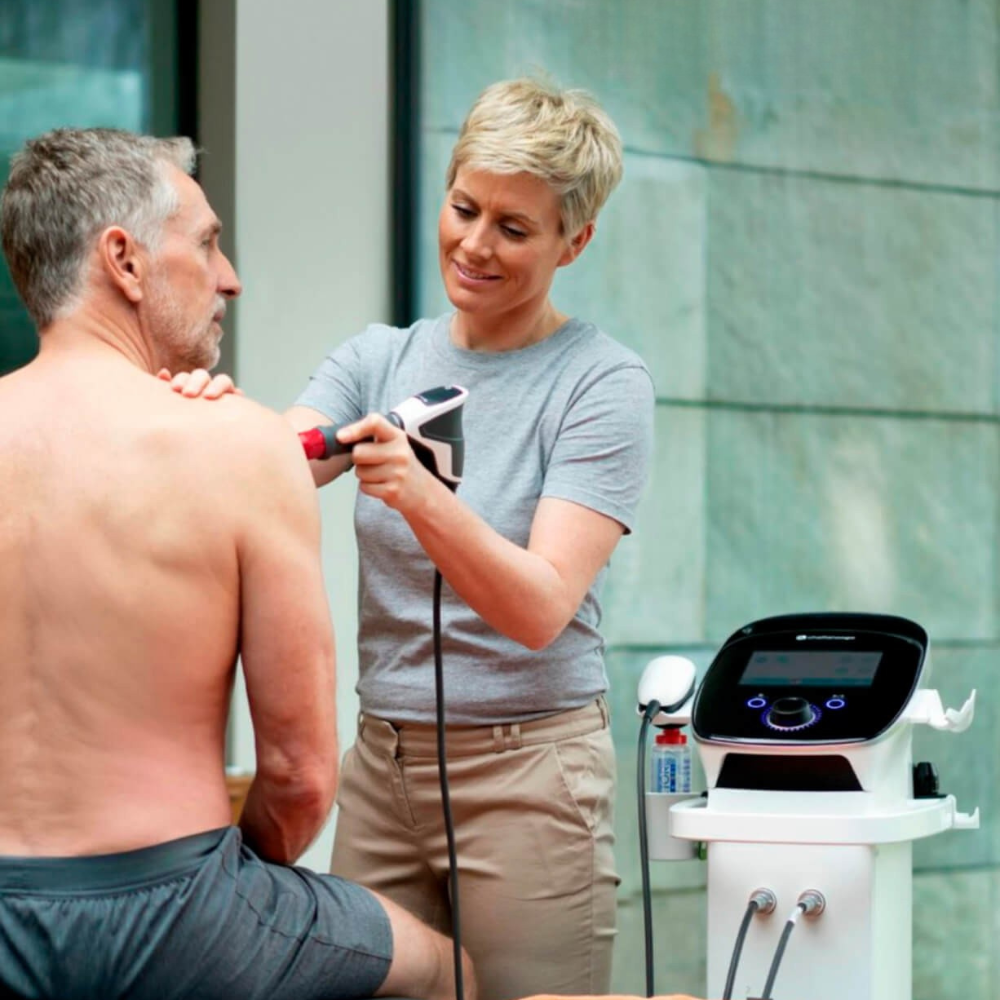
Shockwave therapy (formally known as Extracorporeal Shockwave Therapy, or ESWT) uses high-energy sound waves that are delivered to injured or painful tissue. These sound waves stimulate a biological response in the body that helps promote healing.
Shockwave is commonly used for chronic or slow-healing conditions, especially those involving tendons, ligaments, and areas with reduced blood flow.
Common conditions we treat with shockwave include:
- Plantar fasciitis
- Achilles tendinopathy
- Tennis or golfer’s elbow
- Patellar tendinopathy (jumper’s knee)
- Rotator cuff tendinopathy
- Greater trochanteric pain syndrome (hip pain)
How Does Shockwave Therapy Work?
Shockwave therapy works by creating controlled micro-stimulation in the affected tissue. This helps the body restart the healing process by:
- Increasing blood flow to the injured area
- Stimulating collagen production, which is essential for tendon and tissue repair
- Breaking down unhealthy or disorganized tissue
- Reducing pain sensitivity by altering how nerves transmit pain signals
In many chronic injuries, the tissue has essentially stalled in a “failed healing” state. Shockwave helps push that tissue back into an active repair phase.
Why Shockwave Works Best as Part of a Treatment Plan
Shockwave therapy is powerful—but it’s not a stand-alone cure. The best results happen when it’s integrated into a comprehensive physiotherapy program.
Here’s why:
1. Pain Reduction Allows Better Movement
By reducing pain and sensitivity, shockwave often allows patients to move more comfortably. This makes it easier to perform strengthening, mobility, and loading exercises that are essential for long-term recovery.
2. Exercise Reinforces Tissue Healing
While shockwave stimulates healing, proper loading through exercise tells the tissue how to remodel and become stronger. Without exercise, improvements may be short-lived.
3. Addresses the Root Cause
Painful tissue is often just part of the problem. Poor movement patterns, muscle weakness, or joint stiffness may be contributing factors. Physiotherapy addresses these underlying issues so the pain doesn’t return.
4. Faster Progress for Chronic Conditions
For injuries that have been present for months (or even years), shockwave can help break through plateaus where traditional rehab alone hasn’t been enough.
What Does a Shockwave Session Feel Like?
Patients often describe the sensation as uncomfortable but tolerable. The intensity is always adjusted to your comfort level, and sessions are typically short—about 5–10 minutes.
Most treatment plans involve 3–5 sessions, spaced about a week apart, combined with ongoing physiotherapy treatment and a personalized home exercise program.
Is Shockwave Right for Everyone?
Shockwave therapy is safe for most people, but it isn’t appropriate for every condition or individual. During your assessment at Apple Creek Sports Medicine Centre, your physiotherapist will determine whether shockwave is suitable for your injury, goals, and overall health.
The Bottom Line
Shockwave therapy is a valuable tool that can significantly enhance recovery—especially for persistent, slow-healing injuries. When combined with expert assessment, targeted exercise, and hands-on physiotherapy care, it can help you return to activity with less pain and greater confidence.
If you’re dealing with an injury that just won’t improve, talk to your physiotherapist about whether shockwave therapy could be a helpful addition to your treatment plan.
To learn more or book an appointment, visit Apple Creek Sports Medicine Centre and speak with one of our physiotherapists today.
About the Author:
Vithujan “V” completed his Master of Science in Physical Therapy at the University of Toronto, and his Bachelor of Science in Kinesiology at the University of Waterloo. Vithujan focuses on education, exercise programs, and manual therapy techniques to help achieve your goals, optimize your function, and ultimately return you to the activities that mean the most to you.
For more information about V, click here